Learn How Medicare and Medicaid Impact Your Path to Free Communication Tools and Training
If you or someone you care about lives with combined hearing and vision loss, you may already be receiving support through Medicare or Medicaid for healthcare needs. A question that comes up often is how these programs interact with iCanConnect, the National Deaf-Blind Equipment Distribution Program. The good news is straightforward: Medicaid can actually make the application process smoother and faster, while Medicare has no impact on your eligibility.
iCanConnect is a separate federal program created specifically to provide no-cost communication technology and free personalized training to people whose combined hearing and vision loss makes distance communication difficult. Its eligibility rules are independent of Medicare or Medicaid status, focusing instead on your disability needs and household income. Understanding this can open the door to tools that help you stay connected with family, participate in community activities, and manage daily life with greater independence and confidence.
The Core of iCanConnect Eligibility: Two Simple Requirements
To qualify for iCanConnect, only two federal criteria must be met.
Significant Combined Hearing and Vision Loss
- Your hearing and vision loss must substantially affect your ability to communicate over distances (phone, video, email, etc.). A qualified professional, such as a doctor, audiologist, ophthalmologist, vision or hearing specialist, vocational rehabilitation counselor, educator, or other healthcare/community provider, must attest that your conditions meet the program’s definitions:
- Vision loss: Visual acuity of 20/200 or less in the better eye with corrective lenses, OR a visual field no greater than 20 degrees in diameter, OR a progressive condition expected to lead to one of these.
- Hearing loss: Chronic hearing loss so severe that most speech cannot be understood even with the best amplification, OR a progressive condition expected to reach this level.
- Combination: For whom the combination of impairments cause extreme difficulty in attaining independence in daily life activities, achieving psychosocial adjustment, or obtaining a vocation.
- This attestation is part of the application, and the program makes the process collaborative and supportive. Many people find that their existing eye doctor, audiologist, or primary care provider can provide this documentation easily.
Household Income at or Below 400% of the Federal Poverty Guidelines
- This is where Medicare and Medicaid come into the picture. The income threshold is generous compared to many assistance programs, allowing a wide range of households to qualify. There is no age limit, so seniors on fixed incomes, working adults, and younger individuals all have equal access if they meet the criteria. U.S. residency is required.
How Medicaid Helps Simplify Eligibility
Medicaid is an income-based program, so if you are currently enrolled, you are automatically considered income-eligible for iCanConnect. All you need to do is provide proof of your current Medicaid enrollment (such as your Medicaid award letter or enrollment verification). This single document satisfies the income requirement, no need to submit tax returns, pay stubs, or detailed income breakdowns.
This makes the application quicker and less paperwork-heavy for many applicants, especially those already receiving Medicaid for healthcare. It’s one of the program’s built-in ways to reduce barriers and get technology into the hands of those who need it most.
Medicare Has No Effect on Eligibility
Medicare is available to people based on age (65+), disability status, or certain conditions, not strictly on income. Because of this, Medicare enrollment does not automatically qualify or disqualify anyone from iCanConnect.
- If you have Medicare only, you will prove income eligibility through the second option: documentation showing your total household income is at or below 400% of the Federal Poverty Guidelines. Common forms include a recent federal tax return (IRS 1040), Social Security award letter, pension statements, or other income records, plus a signed statement confirming this represents your full household income.
- If you are dual-eligible (Medicare + Medicaid), your Medicaid enrollment still serves as automatic proof for the income part.
This separation ensures that seniors and others on Medicare can access iCanConnect without worry, even if their income is higher than Medicaid thresholds but still within the 400% guideline.
Understanding the 2026 Federal Poverty Guidelines (400%)
Here are the current income limits used for iCanConnect eligibility (sourced from the U.S. Department of Health and Human Services). These apply to your total household income, including wages, Social Security, pensions, and other sources.
| Number of People in Household | 400% Everywhere Except AK & HI | 400% Alaska | 400% Hawaii |
| 1 | $63,840 | $79,800 | $73,440 |
| 2 | $86,560 | $108,200 | $99,560 |
| 3 | $109,280 | $136,600 | $125,680 |
| 4 | $132,000 | $165,000 | $151,800 |
| 5 | $154,720 | $193,400 | $177,920 |
| 6 | $177,440 | $221,800 | $204,040 |
| 7 | $200,160 | $250,200 | $230,160 |
| 8 | $222,880 | $278,600 | $256,280 |
| Each additional person | Add $22,720 | Add $28,400 | Add $26,120 |
These limits are updated annually and provide substantial room for many households, including those with fixed retirement incomes or part-time earnings.
Why This Distinction Matters for Real-Life Connection
For many with combined hearing and vision loss, the challenge isn’t just healthcare; it’s staying in touch in a world that relies heavily on phones, video calls, emails, and online services. iCanConnect bridges that gap by providing:
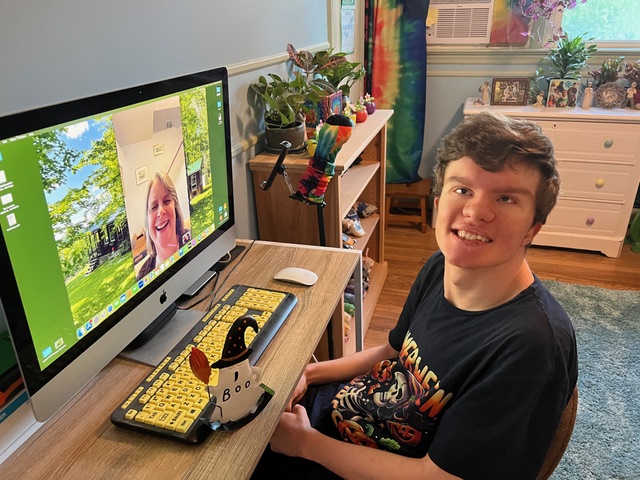
- Tailored technology: Smartphones or tablets with large text, high-contrast modes, speech output, real-time captioning, or video relay features; computers with screen readers, magnification software;braille displays; alerting devices for calls/notifications; adaptive accessories like large-button keyboards or mounts.
- Personalized assessment: A collaborative discussion about your daily routines, communication goals (e.g., calling grandchildren, joining virtual faith groups, managing doctor appointments), and what works best for your vision, hearing, dexterity, and energy level.
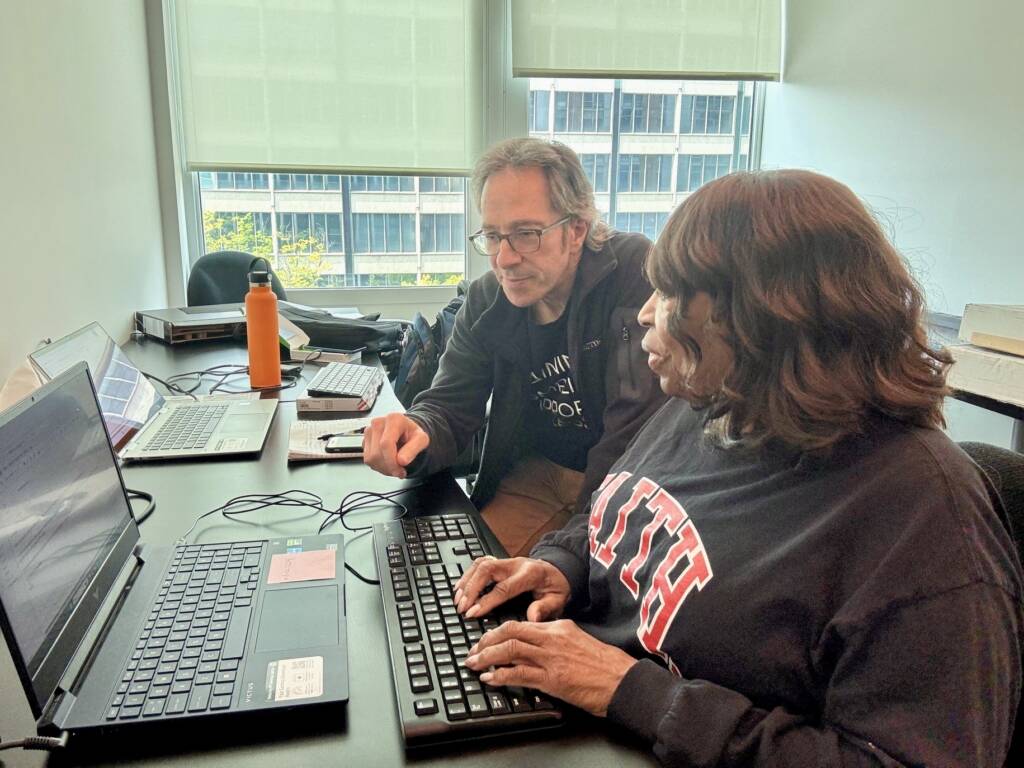
- One-on-one training: Patient, paced sessions focused only on your equipment, no overwhelming general tech lessons. Trainers adapt to your learning style, repeat as needed, and build confidence so you can use the tools independently.
- Ongoing support: Help troubleshooting or adjusting as needs change, ensuring the technology remains a reliable bridge to family, healthcare, community, and independence.
The program doesn’t cover internet/phone service costs, medical devices, or unrelated equipment but everything it does provide is centered on restoring meaningful distance communication.
Common Concerns and Reassurance
Many wonder if applying will affect existing benefits or feel too complicated. iCanConnect is designed to be accessible: the process is guided by local program contacts who answer questions, help gather documentation, and coordinate everything at your pace. Caregivers or family members can assist in the application process.
No one is turned away for assuming their needs “aren’t severe enough” or worrying about paperwork. The program exists because combined hearing and vision loss can isolate people unnecessarily, and awareness plus simple steps can change that.
How to Move Forward
Start by visiting your state’s local iCanConnect contact, they handle applications, explain requirements, and make the process welcoming. Find yours here: https://www.icanconnect.org/how-to-apply/ (state-by-state links).
You can also call the national helpline at 800-825-4595 or explore the main site: https://www.icanconnect.org/contact-us/.
It’s never too late to regain connection and independence. Whether Medicaid streamlines your path, Medicare is part of your healthcare picture, or neither applies, iCanConnect is here to meet you where you are with free, customized tools and training that make everyday communication possible again.
If you’re a caregiver, family member, senior center staff, or healthcare provider, share this information widely. Together, we can help ensure no one misses out on the support that keeps life connected. Reach out today, the first step is often the easiest, and the impact can last a lifetime.